Series
DIY NEUROSCIENCE
Watch science in action in this original TED series about cutting-edge neuroscience experiments on a shoestring budget.

-

How Octopuses Battle Each Other
Greg Gage heads down to the sea to study how the nervous system of an octopus controls its color-changing skin cells (chromatophores) to communicate, camouflage, and battle with rivals.
Featured Experiment Kit
-

How Sound Can Hack Your Memory While You Sleep
Can you actually learn while you sleep? Greg Gage demonstrates Targeted Memory Reactivation (TMR) by playing sound cues to a sleeping subject while recording their real EEG brainwave signals.
Featured Experiment Kit
-
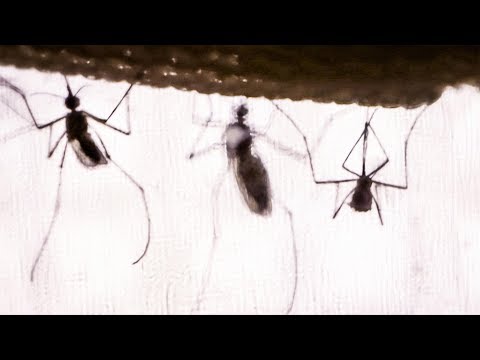
The Real Reason Why Mosquitoes Buzz
It's not just to annoy you! Greg Gage uses sensitive custom microphones and electrophysiology tools to show how male and female mosquitoes adjust their wing-beat frequencies to sing love songs to each other.
Featured Experiment Kit
-
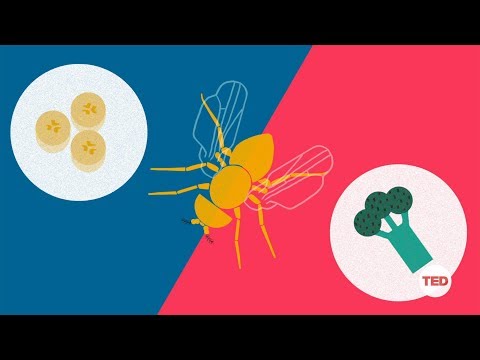
How You Can Make a Fruit Fly Eat Veggies
By using advanced optogenetic tools and light-activated channels, Greg Gage shows how activating specific taste receptors in fruit flies can make them crave green vegetables they normally avoid.
Featured Experiment Kit
-

How a Dragonfly's Brain Is Designed to Kill
Dragonflies are the world's most successful predators, with a 95% hunt success rate. Greg Gage records from their giant visual neurons to show how they calculate intercept trajectories in real-time.
Featured Experiment Kit
-
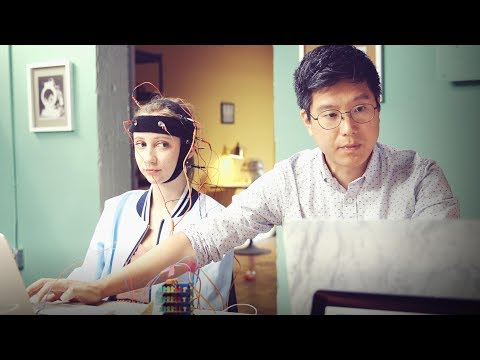
This Computer Is Learning to Read Your Mind
Can a machine decode your thoughts? Greg Gage and Nathan use an EEG headband and machine learning to decode whether a subject is looking at a face, a house, scenery, or a weird picture.
Featured Experiment Kit


Bring "DIY Neuroscience" Into Your Classroom or Home Lab
In this award-winning TED series, Backyard Brains co-founder Greg Gage shows how high-end electrophysiology does not require multi-thousand dollar university laboratory equipment. With Backyard Brains' affordable and open-source DIY neuroscience kits, educators, students, and hobbyists can replicate the exact experiments featured in each episode.
Whether you're studying the color-changing chromatophores of octopuses, hacking memory during sleep with Targeted Memory Reactivation (TMR), or decoding EEG brainwave signals using machine learning, our classroom-tested tools make the invisible electrical signals of the nervous system audible and visual.
Frequently Asked Questions about DIY Neuroscience
DIY (Do-It-Yourself) Neuroscience is a movement initiated by Backyard Brains to make neurobiology experiments accessible to everyone. By designing affordable, research-grade amplifiers and open-source software, we allow students and teachers to record live electrical action potentials (spikes) from neurons, muscles, hearts, and brains without expensive university equipment.
Yes! All Backyard Brains kits and protocols are designed specifically for classroom and educational safety. The electrical currents recorded from human muscles or brains are entirely passive (we are only measuring your body's natural electrical signals, not injecting electricity), and all invertebrate experiments follow ethical, humane guidelines.
To start recording, you'll need one of our SpikerBox kits (such as the Neuron SpikerBox for insect recordings, or the Heart and Brain SpikerBox for human EEG/ECG) and our free, open-source SpikeRecorder app, which runs on Windows, macOS, iOS, Android, and Chromebooks.
We provide complete, NGSS-aligned classroom curricula and lesson plans for middle schools, high schools, and universities. Our kits are robust, highly interactive, and allow students to conduct authentic, inquiry-based STEM projects and design their own experiments.